
Most Greensboro homeowners have a power strip with built-in surge protection plugged in somewhere in the house. That’s a reasonable precaution for individual devices, but it’s not close to the protection a whole-house surge protector provides. A whole-house system protects every circuit and every appliance connected to your home’s electrical system, all at once.
As your local electrical company in Greensboro, we get questions about whole-house surge protection regularly, usually right after a storm or a power event that damaged appliances or electronics. Point-of-use strips just protect what’s plugged into that one outlet. That’s it.
Understanding how these systems work and what they actually defend against helps homeowners decide whether the installation makes sense for their situation. It’s not a device that addresses every electrical problem. But for the right home, it’s one of the more practical things you can do to protect what’s already in it.
What a Whole-House Surge Protector Actually Does
A whole-house surge protector, more formally called a transient voltage surge suppressor, installs at or near the main electrical panel and continuously monitors the voltage entering your home’s electrical system.
When it detects a spike above normal operating levels, it redirects the excess current to ground before it reaches any of your circuits or connected devices. That process happens in nanoseconds, fast enough to prevent damage to sensitive electronics.
What makes this device different from a standard power strip is coverage. It protects all circuits at once: the outlets in your kitchen, the HVAC circuits, and the hard-wired appliances that never get unplugged.
For homes that have accumulated smart thermostats, security systems, home office equipment, and modern kitchen appliances over the years, that blanket coverage addresses a much larger portion of the home’s value than any single power strip ever could.
How It Differs From a Power Strip Surge Protector
Power strips work at the outlet level and protect only what’s plugged into that specific strip. Your refrigerator, HVAC system, hard-wired lighting, and any appliance that connects directly to a circuit rather than through a plug get no benefit from the strip sitting next to your television.
Power strips also have a finite capacity for the surge energy they absorb, and once they’ve taken enough hits, they stop providing protection without any visible indication of failure.
A whole-house system sits between the utility’s service entrance and your panel, catching surges before they enter the home’s internal wiring at all. The two approaches aren’t mutually exclusive, and many homeowners who install whole-house protection also keep point-of-use protection on computers and sensitive electronics as a secondary layer.
Understandingwhat a surge protector does and why you need one at the device level makes it easier to see why the two layers work best together instead of one replacing the other.
If a storm or power event has already cost you a damaged appliance, call us at (336) 499-2015, and we’ll walk through whether whole-house protection makes sense for your home.
What Puts Your Home at Risk for Voltage Surges
Lightning is the most dramatic surge cause but not the most frequent one. Most home surge events come from inside the house rather than outside it:
- Appliance cycling: An air conditioner, refrigerator, or dryer motor starting or stopping creates a small voltage spike on the circuit.
- Cumulative wear: These spikes are minor individually but happen constantly and add up to gradual wear on electronics over months and years.
External surges from the utility grid, caused by equipment switching at substations, downed power lines, or transformer issues, can also send voltage spikes into a home’s wiring. No grid is completely immune to the kinds of events that produce surge conditions.
What the Installation Process Looks Like
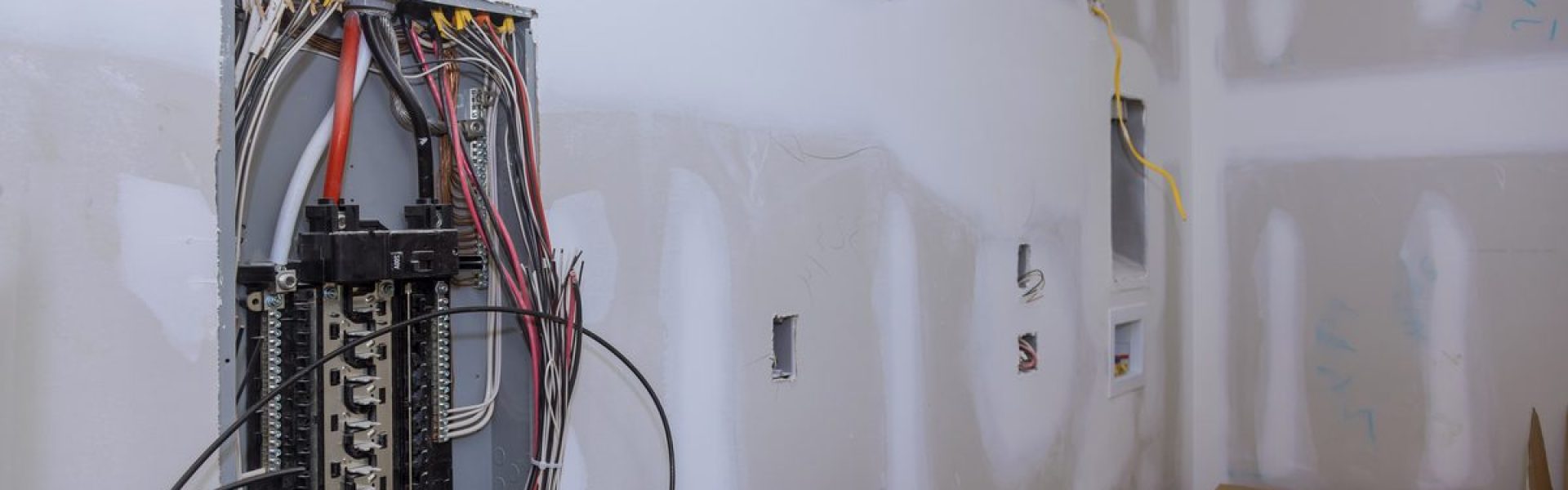
A whole-house surge protector installs at the main electrical panel. The device connects to the panel’s bus bars and needs its own dedicated breaker, typically a small double-pole. The installation itself isn’t long once the panel is open, but it involves working inside the panel enclosure with live components, so a licensed electrician should handle it rather than treating it as a weekend DIY project.
If the panel has an available breaker slot, the installation generally takes one to two hours. We check the panel first to confirm compatibility and verify there’s room for the breaker. If the panel shows other concerns during that assessment, we flag them separately so the homeowner has the full picture.
Aservice panel upgrade and surge protector installation are sometimes done together when an older panel is being replaced anyway, and it’s a sensible way to address the full electrical system in one project visit.
Whether a Whole-House Surge Protector Makes Sense for Your Home
The case for whole house protection gets stronger the more electronics and smart devices a home contains. A house with a basic appliance set and minimal electronics carries a different risk profile than one with a home office, connected devices throughout, and premium kitchen appliances. David Angel and the Triad Electric Solutions crew work through this with homeowners regularly, and the answer is not the same for every house.
For homes that have already lost appliances or electronics to a surge event, the calculation is simpler, because the replacement cost has already been paid once.
Older Greensboro homes with aging wiring can be more susceptible to surge conditions, and homeowners installing a generator often add surge protection at the same time for full system coverage. In both cases, the installation cost weighs well against what a single significant surge event costs in damaged equipment.
Triad Electric Solutions installs whole house surge protection across Lindley Park, Sunset Hills, Irving Park, Kirkwood, and Glenwood, along with Winston-Salem, High Point, and the rest of the Triad area. Get a free estimate on surge protection, or call for 24/7 emergency response if something has already failed.