The tools a Greensboro electrician brings to a job say a lot about how seriously they take the work. A properly equipped crew arrives with diagnostic equipment, safety gear, and the specialty tools each job actually requires, not just whatever was in the van from the last call.
At Triad Electric Solutions, hiring a professional electrician means you get someone who shows up prepared, not someone figuring it out on the fly. What we carry on every truck reflects the standard we hold ourselves to across every residential and commercial job in Greensboro, NC.
Most homeowners never see what goes into a well-stocked electrical service vehicle, and that’s fine. But understanding what a licensed electrician actually carries and why each piece of equipment matters can help you recognize quality contractors from ones who are guessing their way through the job. The difference is real, and the tools are one place it shows up.
The Hand Tools That Go on Every Job
A non-contact voltage tester is the first thing out of the bag on any service call we run. This tool confirms whether a circuit is live before we touch anything, and we do that check every time, no matter how routine the job looks.
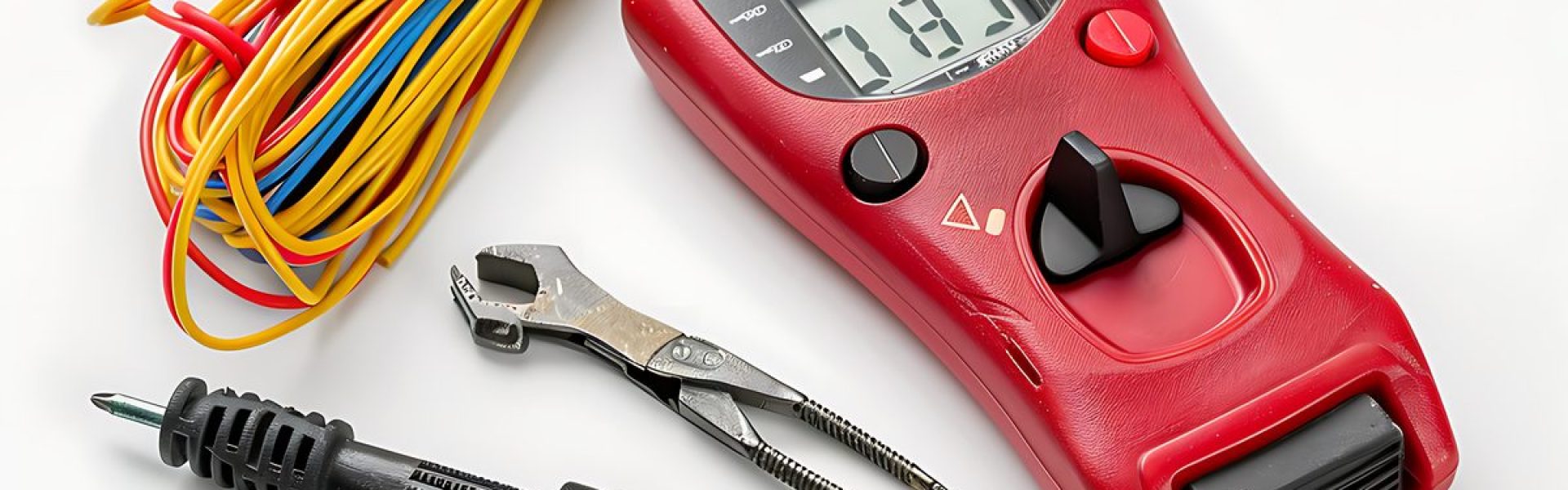
Skipping it is how accidents happen. No job is routine enough to skip a live-circuit verification. We also carry a quality digital multimeter on every call to measure voltage, current, and resistance at any point in the system we’re working on. These are just a couple of the key tools and safety tips we follow every single time we’re on site.
Wire strippers, lineman’s pliers, and needle-nose pliers handle the hands-on work of manipulating conductors, connectors, and components inside junction boxes and panels. Tool quality makes a measurable difference in how clean and accurate the work turns out.
Worn-out hand tools leave marks on wire insulation, create sloppy connections, and slow down the job. You know, it shows up in the finished product whether you notice it at first or not. We replace tools when they stop performing at the level the work demands.
Diagnostic Equipment That Tells Us What We Are Actually Dealing With
A clamp meter is something every serious electrician carries. It measures current flowing through a conductor without requiring direct contact with the wire, which makes it useful for reading live circuits without interrupting service while we work.
Paired with a multimeter, it gives us a full electrical picture of any point in the system we need to evaluate. These two pieces of equipment together are what let us diagnose accurately rather than guess.
Circuit tracers are something we reach for regularly as well, particularly in homes where the panel breakers aren’t correctly labeled, which is more common than most homeowners expect.
Handling electrical repairs in Greensboro without reliable diagnostic gear means the first pass might not be the right one, and that costs the homeowner an extra trip and more time without a working circuit. Tracers let us map the panel correctly before any work starts, rather than discovering mid-job that a breaker controls something different than expected.
If your panel’s breakers aren’t labeled and you’re tired of guessing which one trips which room, call (336) 499-2015 and we’ll bring the right tracer to sort it out the first time.
Tool Category at a Glance
Here is a quick summary of the core diagnostic tools and what each one is for.
| Tool | What It Does | Why It Matters |
|---|---|---|
| Non-contact voltage tester | Confirms whether a circuit is live before anything is touched | Prevents shock on every single call |
| Digital multimeter | Measures voltage, current, and resistance | Diagnoses accurately instead of guessing |
| Clamp meter | Reads current without direct contact with the wire | Checks live circuits without interrupting service |
| Circuit tracer | Maps which breaker controls which circuit | Avoids extra trips caused by mislabeled panels |
| Conduit bender | Shapes conduit to the correct angle for a run | Prevents code issues and physical stress points |
| Fish tape | Pulls wire through finished walls and tight spaces | Avoids drywall damage and exposed cable |
Specialty Tools for Larger Scope Work
Conduit benders come out on any job that involves running new wiring through a structure where the cable needs physical protection. Getting the angles right requires the correct bender for the pipe diameter being used and real experience reading and executing a bend layout.
Sloppy bends create installation problems that show up later as code compliance issues or physical stress points on the conduit run, neither of which a homeowner wants to discover after the walls are closed.
Fish tapes and wire-pulling equipment handle cable runs through finished walls, attic spaces, and crawl spaces where the path isn’t open and accessible. A quality fish tape is rigid enough to navigate past insulation and framing obstacles but flexible enough to make turns without kinking.
Getting wire from one point to another cleanly, without damaging drywall or leaving exposed cable where it shouldn’t be, is what separates a professional installation from one that creates additional repair work later.
Safety Gear That Goes on Before Anything Else
A few pieces of safety equipment are non-negotiable on every job, not just the ones that look risky:
- Insulated gloves rated for the voltage levels on the job
- Safety glasses during drilling, cutting, or any arc-flash risk
- Non-conductive footwear as standard setup, every time
- GFCI-protected extension cords and tools wherever moisture is a factor
Outdoor work, garages, crawl spaces, and bathrooms all present shock risk that doesn’t exist in a dry interior setting. Our crew treats GFCI protection as non-negotiable because skipping it on a job that ends up wetter than expected has consequences no amount of speed makes worth taking on.
Why Equipment Quality Is a Signal Worth Paying Attention To
A contractor who shows up without the right diagnostic equipment is going to guess at some point. Guessing in electrical work either delays the fix or creates a situation where something gets missed until the next service call turns it up. Triad Electric Solutions arrives at every job in Greensboro with everything needed to diagnose, repair, and verify the work already on the truck.
For homeowners evaluating electricians before hiring, asking what diagnostic tools the crew carries is a reasonable question that tells you something real about how they work. The answer reveals whether they are set up to find the actual problem or whether they will replace the most obvious component and see what happens from there.
Triad Electric Solutions is licensed, bonded, and insured in North Carolina under NC License L.34449. Owner David Angel runs every job with a free estimate up front and a six month labor and workmanship warranty on completed work.
Ask what is on the truck before you book. Triad Electric Solutions covers Greensboro and the surrounding Triad area with same day service and 24/7 emergency response, so call (336) 499-2015 for a free estimate or to schedule a service call.
Questions Homeowners Ask About Electrician Tools
Why does a non-contact voltage tester matter so much?
It confirms a circuit is dead or live before anyone touches a wire, panel, or fixture. Skipping this step is one of the most common ways electrical accidents happen, so it’s checked on every call regardless of how simple the job looks.
What's the difference between a multimeter and a clamp meter?
A multimeter measures voltage, current, and resistance at a single point of direct contact. A clamp meter reads current by clamping around a wire without touching it, which makes it useful for checking a live circuit without interrupting service.
Why would an electrician need a circuit tracer?
Panel breakers are often mislabeled or not labeled at all. A circuit tracer maps which breaker controls which circuit before work starts, which avoids a wrong first guess that costs an extra trip and more downtime.
What should I ask an electrician about their equipment before hiring?
Ask what diagnostic tools they bring to a standard service call. A contractor who can name specific equipment and explain why they use it is generally set up to find the actual problem instead of replacing the most obvious part and hoping.