
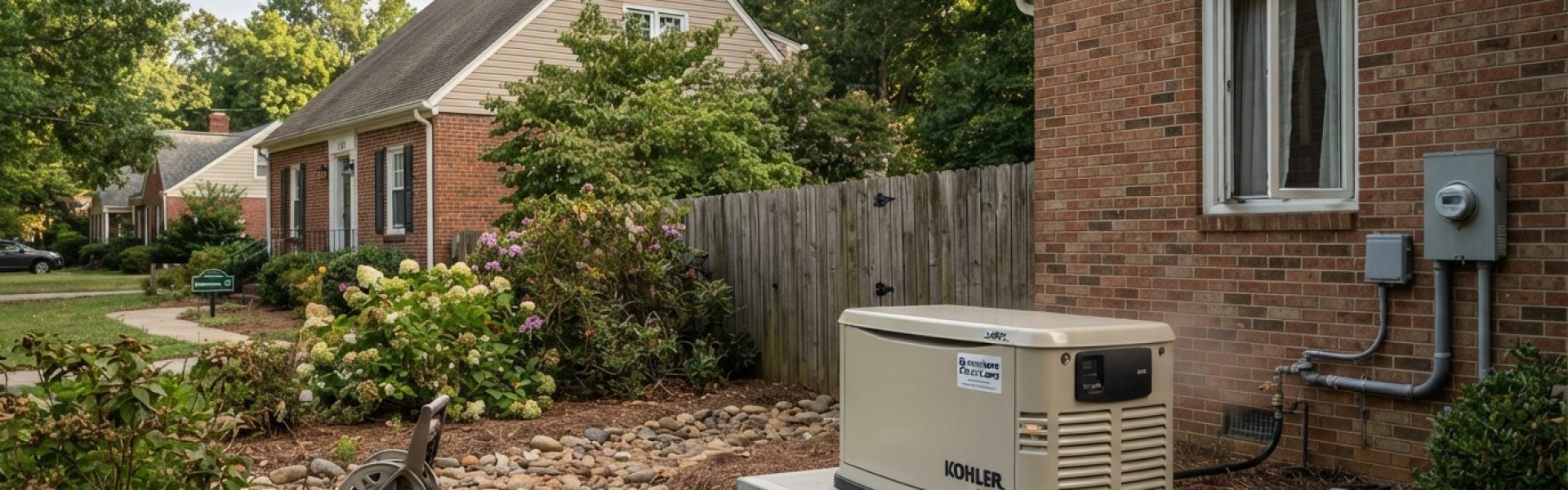
A standby generator in Greensboro, NC is typically installed outdoors on a level pad beside the home, at least 5 feet from windows, doors, and vents, and near the gas meter and electrical panel. Many Generac models may be placed 18 inches from an exterior wall. Local code and site conditions determine the final location. Our licensed, bonded, and insured generator installation team manages placement and permits. Request a site evaluation. |
Power outages in Greensboro can result from summer thunderstorms, winter ice, or the remnants of tropical systems. A standby generator keeps lighting, HVAC, refrigeration, and sump pumps operating automatically during these events. Before selecting a generator size, however, the location must be determined, and it is the first item our generator installation team evaluates.
Placement affects safety, code compliance, noise, installation cost, and long term performance. This article outlines the clearance rules, preferred locations, and areas to avoid, based on installations completed throughout Greensboro.
How a Standby Generator Works
A standby generator is permanently installed outside the home on a concrete or composite pad and connected to a natural gas or propane supply. It continuously monitors utility power and starts automatically within seconds of an outage. Additional detail is available on our generator installation page.
An automatic transfer switch transfers the home from utility power to generator power and back again. Because the generator uses a permanent fuel supply and connects directly to the electrical system, its location must account for exhaust, airflow, fuel piping, and the wiring route to the electrical panel.
How Far Must a Standby Generator Be From the House?
Clearance requirements are based on NFPA 37 and the manufacturer’s installation instructions. We primarily install Generac home standby systems through our generator installation service, and typical minimum clearances for many Generac models are:
- 18 inches from the back of the generator to the exterior wall, for models tested and labeled for reduced clearance
- 5 feet from operable windows, doors, vents, window wells, and other wall openings
- 5 feet of open space above the unit
- 3 feet of clear space at the front and both ends, including shrubs and plantings
Local codes take precedence over manufacturer recommendations. Meeting minimum distances does not guarantee that exhaust cannot enter the home, so every potential entry point, including crawlspace vents, dryer vents, and HVAC intakes, is evaluated. If exhaust odor is detected indoors or a carbon monoxide alarm sounds, contact our emergency electricians immediately.
Preferred Generator Locations on a Greensboro Property
The ideal location balances safety, cost, and convenience. The following criteria guide every generator site evaluation we perform:
- Proximity to the gas meter or propane tank. Shorter fuel lines reduce cost and help maintain proper gas pressure.
- Proximity to the electrical panel. Shorter wiring runs to the transfer switch reduce material and labor costs.
- Level, well drained ground. Greensboro’s red clay retains water, so low areas should be avoided.
- Access for maintenance. Technicians require space to open the enclosure and service the unit.
- Distance from bedrooms. A side yard location reduces noise inside the home.
For many homes in Starmount and Hamilton Forest, a side yard near the gas meter is the most practical location. Because every property differs, the final recommendation is always made on site.
Can a Generator Be Installed in the Front Yard?
A front yard installation is possible but is generally the least preferred option. It may be necessary when the gas meter and electrical panel are both on the front of the home or when side and rear yards are too narrow to meet clearance requirements. These options are reviewed during the site evaluation.
When the front yard is the only viable location, HOA approval and local setback rules should be confirmed, and landscaping should preserve the required 3 feet of open space around the unit. A side or rear location remains preferable for appearance and noise, and our generator installation team recommends it whenever the layout allows.
Locations to Avoid
Certain locations are never acceptable, and others create long term problems. Our electrical repair crew has corrected many installations placed in unsuitable areas. A standby generator should not be installed:
- Inside a garage, basement, shed, or any enclosed or partially enclosed space
- Beneath decks, porches, stairs, or overhangs that can trap exhaust
- Directly below or beside windows, doors, or air intakes
- Adjacent to HVAC condensers, where exhaust heat can reduce efficiency
- In low areas prone to flooding or standing water
- In spaces restricted by fences, dense shrubs, or narrow walkways
- Over buried utility lines, septic systems, or irrigation lines
How Greensboro Weather Affects Placement
The Piedmont Triad experiences a range of weather conditions, each of which influences generator placement. Heavy rainfall requires elevated, well drained ground away from downspouts. Ice and snow require avoiding roof edges where accumulation can slide onto the enclosure, a common concern among homeowners who contact our generator installation team after winter storms.
Mature oaks and pines are common in neighborhoods such as Irving Park and Fisher Park, so units should be positioned clear of overhanging limbs. Adequate airflow is also important during summer. Air cooled units can typically operate 24 to 48 hours before requiring a rest period, so heat buildup should be considered.
Natural Gas vs. Propane
The fuel source has a significant influence on placement. Many Greensboro homes have natural gas service, and locating the generator near the meter keeps the fuel line short, although the meter may require an upgrade to support the additional demand. Fuel connections are completed as part of our generator installation service.
Propane is well suited to homes without natural gas service and to extended outages, since fuel can be stored on site. Tank size and location must meet propane safety setbacks. Diesel options are also available and are more common in commercial settings, which are supported through our commercial electrician services.
Does a Generator Require a Concrete Pad?
Yes. A standby generator requires a stable, level base, typically a composite or poured concrete pad over compacted gravel. A level pad reduces vibration, protects the engine, and keeps the unit above standing water. Pad preparation is included in every generator installation we complete.
HOA Guidelines, Property Lines, and Noise
Several local requirements should be reviewed before installation. Many Greensboro neighborhoods have HOA guidelines for equipment placement or screening, and local zoning may restrict how close equipment can be placed to a property line. Our team can assist with these considerations during a residential service visit.
Noise is another important factor. Standby generators run a brief weekly exercise cycle, so locating the unit away from patios, bedrooms, and neighboring windows minimizes disruption. Low plantings or decorative screening can improve appearance while maintaining required clearances. More information about our approach is available on our about us page.
Does the Electrical Panel Need an Upgrade?
In some cases. The transfer switch is installed at or near the main panel, and older homes with 60 or 100 amp service, fuse boxes, or full panels may require a service and panel upgrade first.
This topic is covered in detail in our article on whether your panel needs an upgrade for a standby generator. Homeowners unsure of their panel’s condition can refer to our list of 7 signs your home needs a panel upgrade.
Generator Size and Placement
Generator size and placement are closely related. A whole home unit is larger and may require more space than a unit that supports only essential circuits. During the evaluation, we review HVAC equipment, well pumps, sump pumps, kitchen appliances, and any EV charger to recommend both the appropriate size and the appropriate location.
Standby vs. Portable Generators
Where a standby unit is not the right fit, a portable generator offers an affordable alternative. Portable units require manual setup, including moving the generator outdoors, adding fuel, and connecting through a generator inlet with a transfer switch or interlock kit. Both options are available through our generator installation service.
Transfer switches and interlock kits prevent back feeding electricity into utility lines, protecting utility workers and household equipment. Portable generators must always operate outdoors, well away from windows and doors and never inside a garage. A whole house surge protector provides additional protection for electronics during power transfers.
Cost of Standby Generator Installation
Standby generator systems typically range from $5,000 to $15,000 or more, while portable generator setups range from approximately $300 to $700. Placement has a direct effect on cost, as distance from the gas meter and panel, pad preparation, meter upgrades, permits, and any required panel upgrades all contribute to the total. You can request a quote and receive clear, affordable pricing in advance.
Our Generator Installation Process
Every generator installation follows a defined four step process, with permits managed by our team:
- Consultation. We review backup power goals, essential circuits, and budget.
- Site evaluation. We measure clearances, confirm fuel and panel locations, and recommend the optimal placement.
- Installation. We set the pad, install the generator and transfer switch, connect fuel, and complete all wiring and permits.
- Testing and maintenance. We test the system under load and support ongoing maintenance.
Why Choose Triad Electric Solutions?
Triad Electric Solutions is a locally owned Greensboro electrical contractor specializing primarily in Generac home standby systems. Additional information is available on our about us page.
- Licensed, bonded, and insured in North Carolina
- More than 500 projects completed since 2021
- Top rated reviews, including 4.8 stars on Google and 5.0 stars on Facebook, Yelp, and Thumbtack
- A six month labor and workmanship guarantee on all work
- 24/7 emergency response
Our full range of electrical services is summarized in our complete guide to home electrical services.
Generator Installation in Greensboro, NC
Triad Electric Solutions installs standby generators throughout Greensboro, including Sunset Hills and Westerwood, as well as High Point and Kernersville.
A complete list of neighborhoods is available on our service areas page. To schedule a site evaluation, call 336.499.2015 or contact our office.