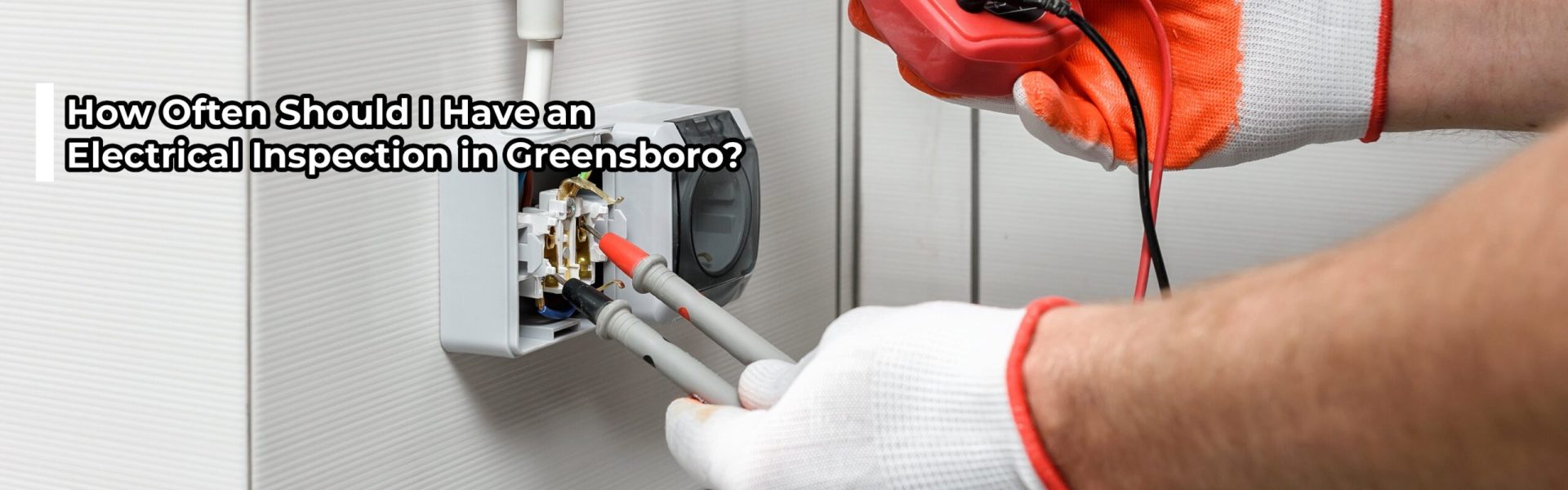
The honest answer is that most homeowners in Greensboro, NC wait too long. An electrical inspection rarely comes up at closing or shows up on a maintenance checklist the way an HVAC tune-up might. It slips through the cracks until a breaker keeps tripping, an outlet stops working, or a home inspector flags the panel. At that point, the problem is already there.
As one of the trusted, licensed electricians offering top-rated electrical services in Greensboro, NC, the pattern we see most often is homeowners who would have saved time and money with an inspection two or three years earlier.
How Home Age Determines Inspection Frequency
The age of your home is the most reliable starting point for figuring out how often to schedule an electrical inspection. Older homes weren’t wired to support today’s electrical loads. A house built in the 1950s was designed for a television, a refrigerator, and a few lamps. That same house now runs central air, a microwave, a washer and dryer, a dishwasher, and a household full of devices charging around the clock. The wiring hasn’t necessarily changed. The demand has.
As a general guideline, homes built before 1980 should have an inspection every three to five years at minimum, and more often if the electrical system hasn’t been updated since original construction. Homes from the 1980s and 1990s are a mixed bag. Some were wired to a reasonable standard; others still have components that don’t hold up well under modern load. A home built after 2000 with no known electrical issues can typically go longer between inspections, but ten years is about as far as we’d push it before having someone take a look.
If you’ve purchased a home without a detailed electrical inspection as part of the sale, that’s the first thing we’d recommend scheduling regardless of the home’s age.
Situations Where You Shouldn't Wait for a Scheduled Inspection
There are circumstances where waiting for a routine inspection window isn’t the right call. A licensed electrician should look at your home’s electrical system sooner if any of the following apply.
Circuit breakers that trip repeatedly on the same circuit aren’t just an inconvenience. They’re a signal that the circuit is being asked to carry more than it was designed for, or that something in the wiring itself is causing a fault. Resetting the breaker doesn’t fix either problem.
Outlets or switches that feel warm, flicker, or make a buzzing sound are worth taking seriously. If you’re planning a home addition, finishing a basement, or adding a Level 2 EV charger installation or generator install, an inspection before that work starts tells you whether your current panel can handle the added load. A panel upgrade discovered mid-project costs more and disrupts more than one planned at the start.
A burning smell near any outlet or panel is a reason to stop and call immediately. Don’t troubleshoot it.
What We Actually Look At During an Inspection
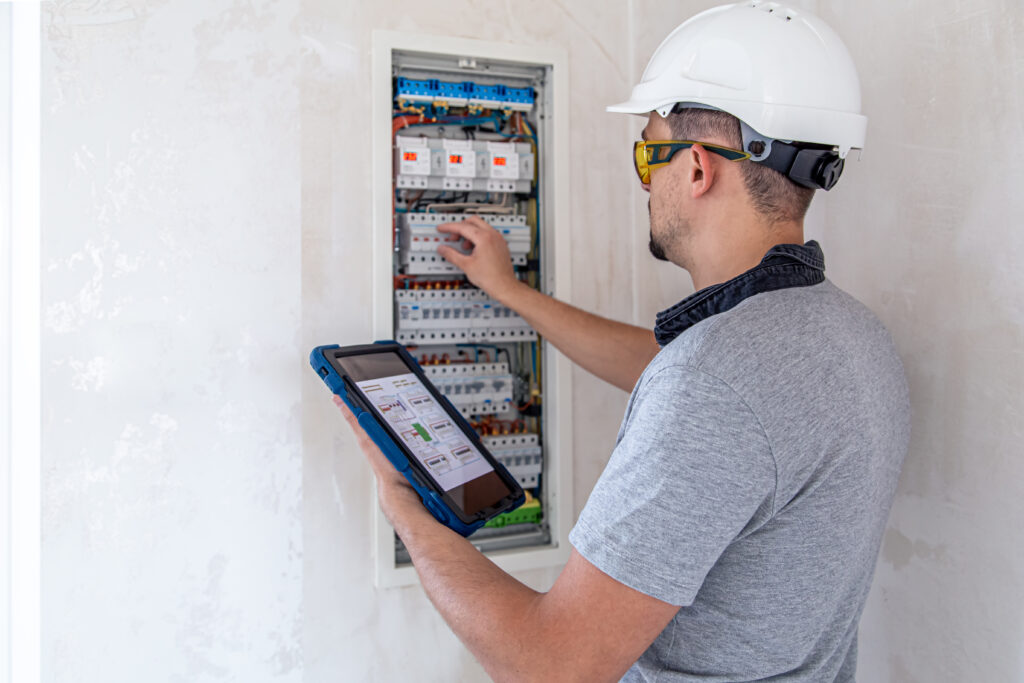
An electrical inspection isn’t a quick glance at the breaker panel. We work through the system methodically, starting with the service entrance and working inward.
At the panel, we check for proper breaker sizing, double-tapped breakers, evidence of heat damage, and whether the panel itself is one that carries known reliability concerns. Some panel brands have documented failure rates that should prompt replacement regardless of visible condition. From there, we check outlets and switches throughout the home, looking for proper grounding, evidence of DIY wiring that doesn’t meet code, and any outlets in wet areas that lack GFCI protection.
We also look at the condition of visible wiring, junction boxes that aren’t properly covered, and whether circuits are labeled accurately. For older homes in Lindley Park and Irving Park, we pay close attention to signs of aluminum wiring from the 1960s and 1970s, and to cloth-sheathed wiring that may still be in use in parts of the home.
What We Find in Greensboro's Older Neighborhoods
Greensboro has a substantial stock of older housing. The neighborhoods that define the city’s character, from Sunset Hills to Lawndale Homes to Hunter Hills, are also where we find the most work to do.
The most common findings in homes built before 1980 are undersized panels originally installed at 60 or 100 amps, aluminum branch circuit wiring from the period when copper prices spiked, and outlets that were never updated to three-prong or GFCI-protected configurations. None of these are necessarily emergencies on their own, but all of them affect the safety and reliability of the electrical system over time.
David Angel grew up in Greensboro and has been doing electrical work here since founding Triad Electric Solutions in 2021. The homes he works on are the same ones his neighbors and family live in. We’re not looking to generate unnecessary work. We’re looking to give homeowners an accurate picture of what they have and what, if anything, needs attention.
Frequently Asked Questions
How do I know if my home needs rewiring?
Signs that a home may need a home rewire include cloth-sheathed or knob-and-tube wiring in older homes, aluminum wiring from the 1965 to 1973 period, outlets or switches that spark, circuit breakers that trip without a clear cause, or a home inspection report flagging wiring as unsafe or non-compliant.
How do I know if I need a service panel upgrade?
Common signs include breakers that trip frequently, a panel with fewer than 200 amps of capacity in a home with modern appliances, a fuse box rather than a breaker panel, breakers that feel warm or show scorch marks, or an inspection report flagging the panel as outdated. A licensed electrician can assess whether a service panel upgrade is the right next step.
What counts as an electrical emergency?
A burning smell from an outlet or panel, a breaker that won’t reset and is leaving part of your home without power, sparking from an outlet or switch, or a complete loss of power to the home. If you’re unsure, call. It’s always safer to have a licensed electrician assess the situation than to wait.
Does an inspection automatically mean expensive repairs?
No. Many inspections come back with minor issues or nothing at all. The point is to get an accurate read on your system so you can make decisions with real information. If we find something that needs attention, we’ll explain what it is, why it matters, and what the options are before any work begins.
Contact Us
Have electrical questions, need a quote, or want to schedule service? We’re here for you day or night!
Phone: (336) 499-2015
Message: Use the contact form on our website under “Get In Touch” to send us a message.
Service Areas: 321 New Street, Greensboro, NC 27405
Business Hours: Open 24 hours
We handle both residential and commercial projects.
Related Topics: