Power outages in Greensboro, NC are far from hypothetical. Ice storms, summer thunderstorms, and hurricane remnants make multi-day outages a genuine concern, and homeowners who’ve sat through a three-day blackout rarely need convincing to get a generator installed. The real challenge lies in knowing what type to get, how it connects to your home, who handles the permits, and what the installation actually involves.
As a licensed electrical contractor offering proven electrical services across Greensboro and the Triad area, our reliable electricians handle generator installs regularly, and they rank among the more involved projects we take on. Here’s a clear, practical breakdown of the full process.
Standby Generators vs. Portable Generators
The first decision is which type of generator makes sense for your situation.
A standby generator is permanently installed outside the home, typically on a concrete pad, and runs on natural gas or propane through a direct fuel connection. It monitors utility power and starts automatically within seconds of an outage. You don’t have to be home. You don’t have to pull a cord or find extension cables. It runs until power is restored and shuts off on its own. Whole-home standby generators can power everything in the house; partial-load units are sized to cover selected circuits, which keeps upfront costs down without sacrificing critical systems like HVAC and refrigeration.
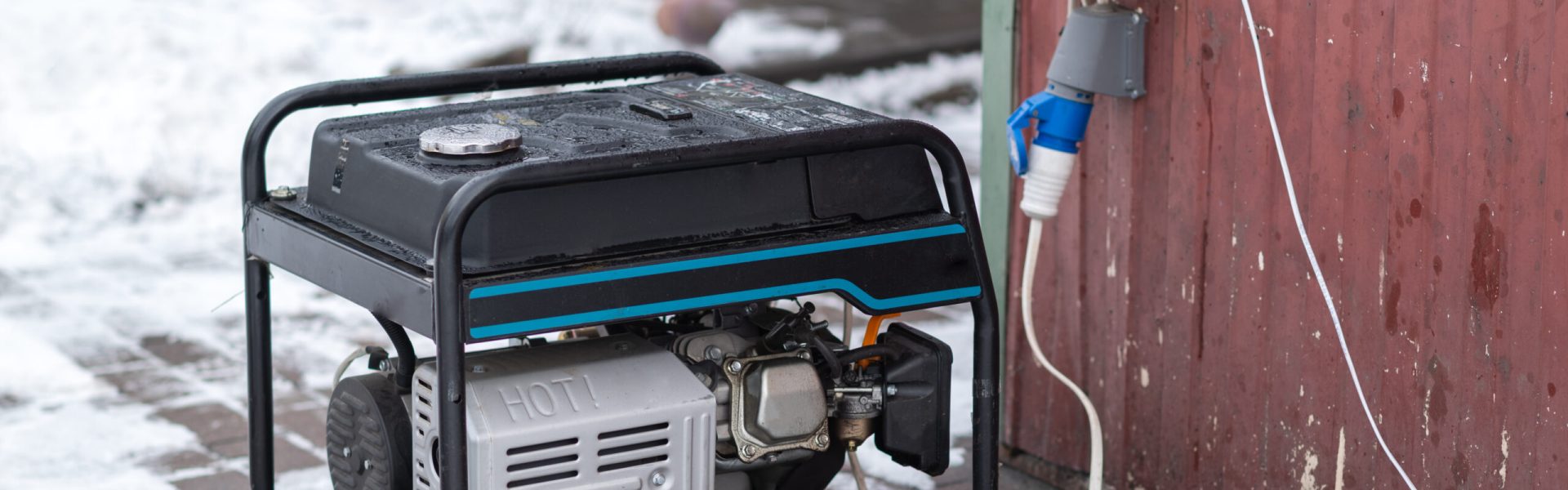
A portable generator runs on gasoline, requires manual startup and fueling, and must always be operated outside to prevent carbon monoxide exposure. It’s a less expensive upfront option, but connecting it to your home requires a transfer switch or interlock kit. A direct connection to a wall outlet or the main panel without a transfer switch is a code violation and a serious safety hazard.
Both are options we install. The right choice depends on your budget, how often your area loses power, and what you need to keep running during an outage.
How to Size a Generator for Your Home
Generator capacity is measured in kilowatts (kW). Sizing depends on what you want powered during an outage, not on the square footage of the house.
A partial-load standby generator in the 10 to 16 kW range typically covers the HVAC system, refrigerator, lighting, and a handful of other circuits. A whole-home generator for a standard-size residence usually starts at 20 to 22 kW and goes up from there for larger homes or those with high-draw appliances like electric ranges or hot tubs.
We do a load calculation as part of the estimate. That means looking at what’s in your home, what you want to keep running, and what your panel’s current capacity is before recommending a size. A generator that’s undersized for your actual load is nearly as frustrating as having no generator at all.
The Transfer Switch Requirement
Every generator installation that connects to your home’s electrical system requires a transfer switch or interlock kit. This is not optional — it’s a code requirement, and the reason behind it matters.
Without a transfer switch, a generator running during an outage can back-feed power into the utility lines, which creates a hazard for utility workers and for neighbors nearby. A properly installed transfer switch isolates your home from the grid when the generator is running, so power flows only where it’s supposed to go.
For standby generators, an automatic transfer switch (ATS) is standard. It manages the switchover without any action from the homeowner. For portable generators, a manual transfer switch or interlock kit installed at the panel serves the same purpose. We include the transfer switch as part of every generator install we do. If you’re replacing an older generator and the existing transfer switch is undersized or outdated, we assess that as part of the job.
What the Permit Process Looks Like
Generator installations that connect to your home’s electrical system require an electrical permit in Greensboro. We apply for the permit as part of the job. After installation, the work is inspected by the City of Greensboro or Guilford County depending on jurisdiction. The inspection verifies that the transfer switch is correctly installed, the generator is properly connected, and all work meets current code.
This is not a step to skip. Unpermitted generator installations create problems at insurance claim time and at resale. A contractor who installs without pulling the required permits is cutting a corner that will eventually cost the homeowner more than the permit would have.
What the Installation Process Looks Like
For a standby generator, the work typically spans more than a single day depending on scope. We coordinate with your fuel supplier for the gas line connection if the unit runs on natural gas or propane. We prep the site, install the concrete pad if needed, set the generator, run the wiring to the panel, install the automatic transfer switch, and test the full system before we leave.
David Angel has been doing this work in Greensboro since founding Triad Electric Solutions in 2021. We serve Kernersville, Oak Ridge, Summerfield, High Point, and Greensboro for generator work. Every install comes with a six-month labor and workmanship warranty and a free estimate before any work starts. If your panel is on the older side, it’s worth asking for a service panel upgrade assessment at the same time — better to know before the generator is connected than after.
Questions to Ask Before Hiring a Generator Installer
Before hiring any electrical contractor for a generator installation, ask these directly:
Are you licensed with NCBEEC? If they can’t answer that question immediately, move on.
Will you pull the required permits? The correct answer is always yes.
Does the installation include the transfer switch? It always should.
What’s your warranty on the labor and workmanship? A legitimate contractor has a clear answer. Ours is six months on every job.
Related Topics: