
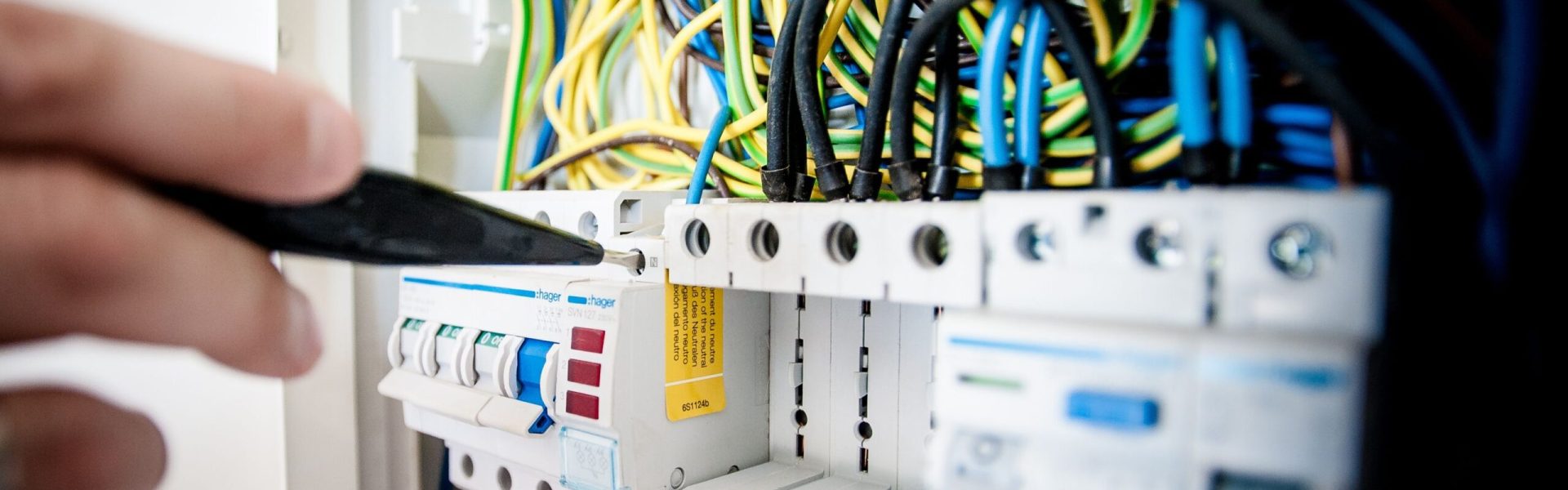
100-amp service can meet the needs of a smaller home with modest electrical demand, while 200-amp service has become the standard for most homes today because it comfortably supports central air, electric appliances, and additions like EV chargers or generators. The right choice depends on your home’s size, current load, and future plans — a licensed electrician can confirm which fits your situation with a panel evaluation.
What "100-Amp" and "200-Amp" Actually Mean
Amperage, in this context, refers to how much electrical current your home’s main service can safely deliver at once. Think of it as the total width of the pipe carrying electricity into your home — a wider pipe delivers more at a time, without any single point becoming overloaded. A 100-amp service and a 200-amp service aren’t different qualities of electricity; they’re different capacities for how much your home can draw simultaneously across every circuit, appliance, and system running at once.
This capacity is set at the main breaker and service entrance, not at each individual outlet, which is why capacity questions come up specifically when a homeowner is adding something that draws a lot of power — not when they’re just adding another lamp.
100-Amp Service: What It Typically Supports
100-amp service was standard in many homes built several decades ago, when electrical demand per household was meaningfully lower than it is today. It can still be entirely adequate for a smaller home with a modest set of appliances and no major electric-heavy additions planned. The limitation shows up specifically when several significant loads are trying to draw power at the same time — central air conditioning, an electric range, an electric dryer, and now potentially an EV charger or generator transfer switch, all competing for a smaller overall capacity.
200-Amp Service: Why It's Become the Common Standard
200-amp service has become the default recommendation for most homes today, largely because household electrical demand has grown substantially — larger HVAC systems, more electronics, electric kitchen appliances, and increasingly EV charging and backup power. A 200-amp service provides meaningfully more headroom, which reduces the likelihood of needing another upgrade a few years later when the next major appliance or addition comes along.
That said, 200 amps isn’t an automatic requirement for every home. A smaller, all-gas home with limited electrical demand may genuinely be well served by 100-amp or 150-amp service. The right answer depends on an actual assessment of your home’s electrical load, not a blanket rule.
The Loads That Typically Drive This Decision
A handful of specific additions are usually what push a homeowner from “100 amps has been fine” to “we should look into 200 amps.” These include:
- EV charging — Level 2 home EV chargers draw substantially more power than most household circuits, and stacking one onto an already-strained 100-amp service is one of the most common reasons for an upgrade conversation.
- Standby or whole-home generators — a transfer switch and generator setup interacts directly with your main panel’s capacity, which is why generator installation and panel readiness often get evaluated together.
- Electric HVAC systems — heat pumps and larger central air systems draw more continuous power than older HVAC equipment.
- Electric ranges, dryers, and water heaters — replacing gas appliances with electric versions adds meaningful new load.
- Hot tubs and workshops — both typically require dedicated high-draw circuits.
- Home additions — more square footage generally means more circuits, lighting, and appliances drawing from the same panel.
Panel Upgrade vs. Full Service Upgrade
It’s worth understanding the difference between these two related but distinct projects. A panel upgrade or replacement swaps out the breaker panel itself — often because it’s outdated, damaged, or out of physical space for new circuits — without necessarily increasing the amperage coming into the home. A full electrical service upgrade increases the actual amperage capacity delivered to the home, which typically involves the meter base, the service entrance conductors, coordination with the utility provider, and the panel itself.
If your goal is genuinely more capacity — to support an EV charger, generator, or major addition — a service upgrade is usually the relevant conversation, not just a panel swap. A licensed electrician can clarify which one actually solves your specific situation.
Panel Space vs. Electrical Capacity: Two Different Limits
These get confused often, but they’re not the same thing. Panel space refers to how many physical breaker slots are available. Electrical capacity refers to how much total power the service can deliver, regardless of how many slots are open. A panel can have plenty of open slots and still be at its amperage limit, and conversely, a panel can be tightly packed with breakers while still having capacity headroom. A professional load calculation is what actually determines capacity — counting open slots on the panel door doesn’t.
How a Load Calculation Determines the Right Fit
Rather than guessing, a licensed electrician performs a load calculation that accounts for your home’s square footage, existing major appliances, HVAC system, and any planned additions like an EV charger or generator. This calculation compares your home’s actual and anticipated demand against your current service’s rated capacity, which is what actually determines whether 100 amps is sufficient, or whether 200 amps (or something in between) makes more sense for your situation.
This is also why two homes of similar size can get different recommendations. A smaller all-electric home with a heat pump, an electric range, and an EV charger can have more total demand than a larger home that uses gas for heating, cooking, and hot water. Square footage alone doesn’t tell the whole story — it’s the combination of your home’s systems and appliances that determines actual load.
Permits and Inspections
In Greensboro, electrical service upgrades typically require a permit and inspection, and in many cases, coordination with the utility provider (Duke Energy, for most of the Triad area) to disconnect and reconnect service safely during the upgrade. A licensed electrical contractor handles this coordination as part of the project rather than leaving it to the homeowner.
How This Decision Affects Home Value and Financing
Panel capacity isn’t only a day-to-day convenience question — it can also come up during a home sale or refinance. Lenders and inspectors sometimes flag outdated or undersized electrical service as a concern, and homes with modern, adequately sized service can be an easier sell when the time comes. If you’re planning to sell in the next few years, it’s worth factoring that into the decision alongside your current electrical needs.
What Influences the Cost of Either Project
Every home is different, so rather than offering a generic price range that may not reflect your actual situation, it’s worth knowing what factors go into the cost of a panel upgrade versus a full service upgrade: the physical distance between your meter and panel, whether the meter base itself needs replacing, utility coordination requirements, permit fees, and the specific panel or equipment selected. A licensed electrician can give you an accurate, situation-specific quote once these factors are assessed.
When Professional Evaluation Makes Sense
If you’re planning any of the additions mentioned above, currently experiencing signs of panel strain, or simply unsure whether your home’s service is adequate for how you actually live in it, a professional evaluation is the direct way to get a real answer rather than a guess. It’s also worth reviewing the specific warning signs that suggest a panel needs attention if you haven’t already, since those signs often show up before a homeowner even starts thinking about amperage.
Frequently Asked Questions
Is 100-amp service enough for my home?
It depends on your home’s size and electrical load. A smaller home with modest appliance use and no major electric additions planned can be fine on 100 amps. Homes adding EV charging, a generator, or electric HVAC often benefit from more capacity.
Should I upgrade to 200 amps?
Not automatically — it depends on your current and planned electrical load. A load calculation from a licensed electrician is the accurate way to determine whether 200 amps (or another capacity) fits your situation.
What's the difference between a panel upgrade and a service upgrade?
Most residential panels are built to last several decades, but age alone isn’t the only factor — panel condition, prior repairs, and how much load has been added over the years all matter. A visual inspection and load review can tell you more than age alone.
Do I need 200 amps for an EV charger?
Not necessarily. Many 100-amp homes can support a Level 2 EV charger if there’s sufficient spare capacity after a load calculation. Others need a service upgrade first. It depends on your home’s existing electrical demand.
How much panel space do I need for new circuits?
This depends on what you’re adding. Available breaker slots and available electrical capacity are two different things — a panel can have open slots but still be at its amperage limit, so a professional assessment matters more than counting empty spaces.
Does upgrading electrical service require a permit?
Often, yes, if a load calculation confirms sufficient spare capacity for both — but it depends entirely on your home’s total electrical demand. This is exactly the kind of scenario where evaluating your full plans at once, rather than one addition at a time, gives you a more accurate answer.
Can I run an EV charger and a generator on the same 200-amp panel?
Often, yes, if a load calculation confirms sufficient spare capacity for both — but it depends entirely on your home’s total electrical demand. This is exactly the kind of scenario where evaluating your full plans at once, rather than one addition at a time, gives you a more accurate answer.
What happens if my panel is undersized for my home's needs?
An undersized panel can lead to recurring breaker trips, an inability to add new circuits, and in some cases safety concerns from components working beyond their rated capacity. A load calculation identifies whether this is happening and what capacity would actually resolve it.