
Choosing the right generator size is one of the most important decisions you’ll make when preparing for power outages or planning backup power solutions. Whether you’re a homeowner protecting your family’s comfort or a business owner safeguarding operations, getting the sizing right ensures you have adequate power when you need it most. Many people consult with the best electrical services in Greensboro, NC, for professional guidance on selecting and installing generators. This comprehensive guide walks you through the process of calculating your power requirements, understanding different generator types, and considering factors that influence the selection of size. You’ll learn specific sizing approaches for both home and business applications, helping you make an informed decision about your backup power needs.
Power Requirement Calculation
To determine the appropriate generator size, we calculate the total power requirements of the electrical devices that need to be powered during an outage. This calculation involves identifying the wattage of each device that will be connected to the generator and summing these values to determine the total power required. It’s essential to consider both the running watts and the starting watts of devices, as some appliances have a higher initial power draw. Considering any potential future electrical devices that might be added, it is prudent to ensure the generator can handle increased loads. Accurate power requirement calculation helps in selecting a generator that can adequately supply the necessary electricity during emergencies.
Understanding Generator Types
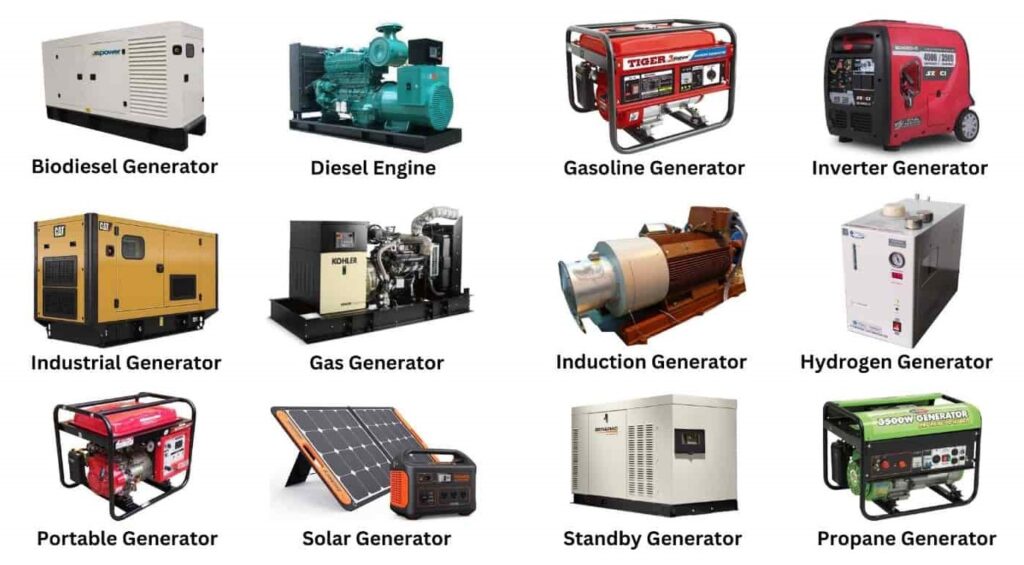
Different generator types serve specific purposes, and understanding their distinctions helps you select the most suitable option for your needs. Portable generators, typically fueled by gasoline or propane, are versatile and ideal for temporary power needs. They are compact and easy to transport, making them ideal for camping or using small power tools. Standby generators, powered by natural gas or propane, are designed for seamless, automatic backup power during outages and are commonly used in residential or commercial settings. Inverter generators provide clean and stable power, making them ideal for sensitive electronics due to their low Total Harmonic Distortion (THD) levels. Welder generators combine a generator and a welding machine, meeting the needs of those who require both functionalities in a single unit. Each type has specific features that cater to distinct power requirements.
Factors Influencing Generator Size
Factors that play a crucial role in determining the appropriate size of a generator include the total power requirements of the connected loads, the starting power surge of the equipment, and the duty cycle or runtime needed. Understanding the total power requirements involves calculating the wattage of all devices that will be running simultaneously on the generator. The starting power surge, often higher than the running wattage, must be considered. This surge is particularly important for appliances such as refrigerators and air conditioners. The duty cycle or runtime required refers to the duration for which the generator must run continuously. By carefully analyzing these factors, one can accurately determine the size of the generator required to meet the power demands of the connected loads efficiently.
Sizing Guide for Home Use
Considering the unique power requirements of residential settings, determining the appropriate size of a generator for home use involves precise calculations and understanding specific load demands. To accurately size a generator for home use, we must calculate the total power consumption of needed appliances and devices that would need to be powered during an outage. This involves identifying the starting and running wattage of each item, taking into account any motor-driven appliances that have high starting wattage requirements. Once these values are determined, they should be totaled to find the minimum required generator size. It’s essential to choose a generator that not only meets the minimum power requirements but also provides some additional capacity to accommodate potential future needs or unexpected power surges.
Sizing Guide for Business Applications
When determining the appropriate size of a generator for business applications, a thorough assessment of the power requirements specific to the operational needs is important. Calculating the total wattage of all equipment, including machinery, computers, lighting, and HVAC systems, is important. Consider both the starting and running wattage of each device to make sure the generator can handle the initial power surge. Consider the type of business and its critical functions; for instance, a hospital will have different power needs compared to a small office—factor in any future expansion plans to avoid outgrowing the generator too soon. Consulting with a professional electrician or generator specialist can provide valuable insights tailored to your business’s unique requirements.
Related Topics: