Older homes in and around downtown High Point, NC, carry a lot of character. They also carry electrical systems that were designed for a fraction of today’s load. Finding experienced electrical services in Greensboro, NC, that also covers the broader Triad area and regularly works with historic homes means getting an honest assessment of what the system actually needs, rather than a general inspection that misses the details that matter most. Here is what comes up most often in these older properties.
Undersized Electrical Panels
Many homes in downtown High Point and the surrounding historic neighborhoods were built with 60-amp or 100-amp service. A 200-amp panel is the current minimum standard for most residential properties, and that baseline assumes a typical modern load including central HVAC, a full kitchen, a washer and dryer, and general lighting throughout the home.
Add a Level 2 EV charger or a standby generator, and demand rises further. An undersized panel is not just an inconvenience since a panel that cannot support the load is a safety concern. Breakers trip repeatedly because circuits are overloaded, and in some cases, prior owners have replaced breakers with higher-amp versions to stop the tripping, which removes a protection the panel was designed to provide. If the panel is 100 amps or below and the home carries a modern load, a licensed electrician should assess whether a panel upgrade makes sense.
Federal Pacific and Zinsco Panels
Homes built between the 1950s and 1980s in High Point and the surrounding Triad area sometimes still have Federal Pacific Electric or Zinsco panels. Both brands have documented histories of failing to trip under fault conditions, meaning they may not cut power during a short circuit or overload. That failure is a fire hazard.
Many insurance carriers will not insure homes with these panels, and some will drop coverage upon discovering one. If a home in downtown High Point or the surrounding neighborhoods is being purchased, the panel brand should be part of the inspection checklist. Neither brand is required by law to be replaced, but the case for doing so is clear. Panel upgrades are handled with proper permitting through the local building department.
Knob-and-Tube Wiring
Knob-and-tube wiring was the standard installation method in homes built before the late 1930s. It runs as two separate conductors with no ground wire and was designed for the electrical loads of that era, which were far lighter than today’s.
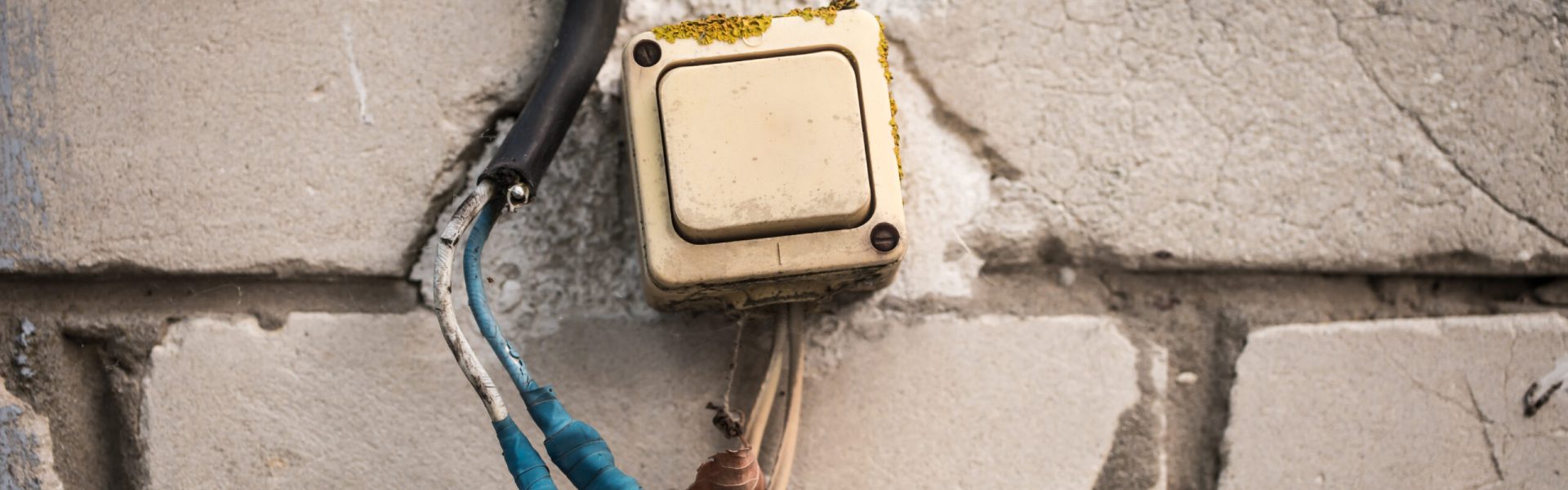
Wiring is not inherently dangerous when in good condition and not overloaded. The problems arise when it is spliced improperly, covered with insulation that traps heat, or when modern loads are pushed through circuits designed for much lighter use. Many insurance carriers restrict or refuse coverage on homes with active knob-and-tube wiring. If a home has this type of wiring and a sale, renovation, or circuit addition is planned, a licensed electrician should assess it first. Depending on the condition and scope, partial or full electrical rewiring may be recommended.
Aluminum Branch Circuit Wiring
Homes built in the late 1960s and early 1970s sometimes have aluminum branch circuit wiring. Aluminum was used during a period when copper prices were high, but it expands and contracts with heat cycles at a different rate than copper and oxidizes, increasing resistance at connections over time.
Loose or oxidized aluminum connections at outlets, switches, and fixtures are a fire hazard. If the home was built between roughly 1965 and 1975, aluminum branch circuit wiring is a possibility. A licensed electrician should assess all connections and determine whether remediation is needed.
Outdated Outlets and Missing GFCI Protection
Older homes in downtown High Point frequently have two-prong ungrounded outlets in bathrooms, kitchens, and exterior locations. The current NEC code requires GFCI protection in those areas. While older homes are not legally required to be retrofitted to current code unless work is being performed in that area, the safety argument for upgrading is strong.
Two-prong outlets cannot support the three-prong grounded plugs that most modern appliances require. GFCI protection can be added without full rewiring in many cases, and this type of upgrade falls under residential service calls and repairs.
Adding Modern Loads to an Older System
Adding EV charger installations, generator installations, a new HVAC system, or running new circuits for a kitchen or bathroom renovation all put demands on an electrical system that was not built for them. Each addition should be evaluated in the context of the existing panel capacity and wiring condition before work begins, rather than after problems surface.
What to Do Before Buying a Historic Home in High Point
A dedicated electrical inspection before closing is worth the cost. A licensed electrician can identify panel issues, wiring type, missing safety devices, and code concerns that a general home inspector may not catch in sufficient detail. Pre-purchase electrical assessments are available throughout High Point and the Triad.
Call (336) 499-2015 or email David@T-E-Solutions.com to schedule a free on-site assessment. The electrical system will be reviewed in full, options will be explained clearly, and a written estimate will be provided before any work begins. All work by the licensed team is backed by a six-month labor and workmanship warranty.
Related Topics: